
Methodology
How every Financepedia entry is researched, sourced, reviewed and kept current.
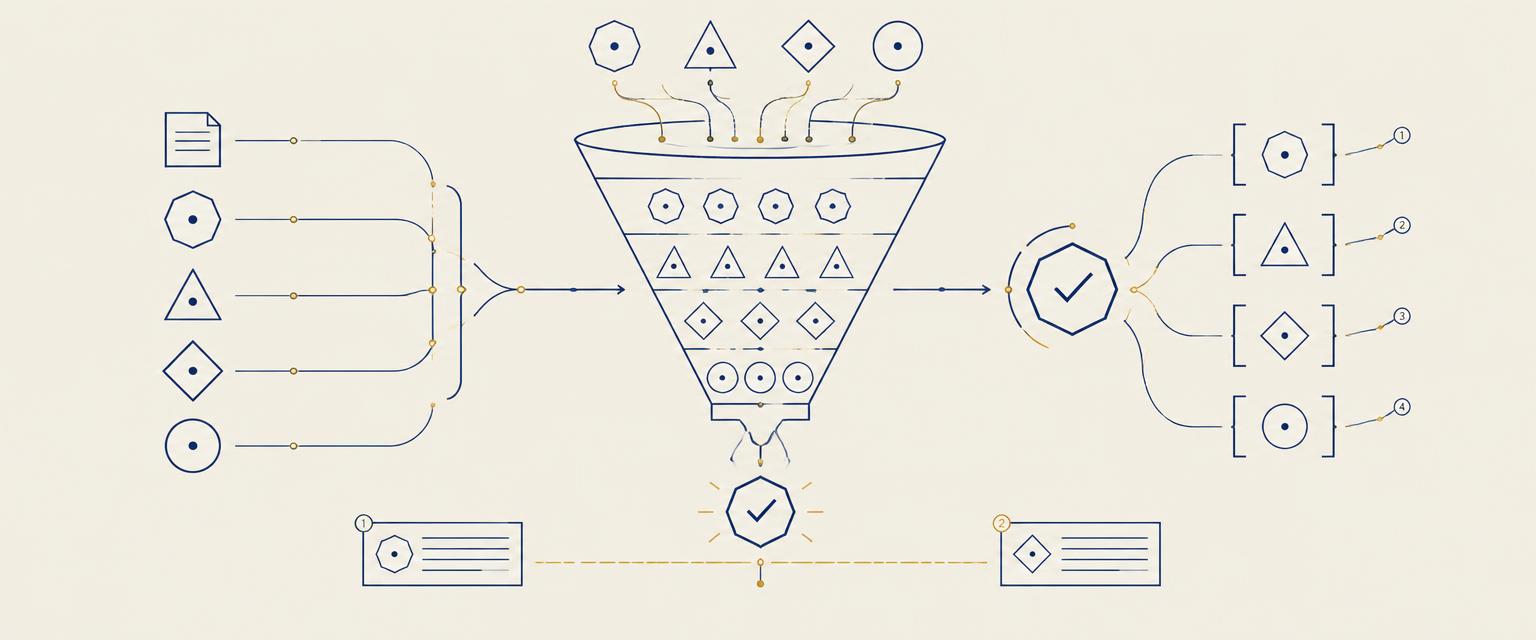
Financepedia entries are produced by a research-and-drafting pipeline with a human review gate before publication. This page describes that pipeline, step by step.
- 1
Entity selection
We cover entities with real reader demand and a verifiable source of record — banks, regulators, savings products, funds and market institutions. We deliberately avoid topics where a strong, well-maintained reference already exists.
- 2
Sourcing
Sources are tiered. Tier 1 is the source of record: the institution itself, the regulator, or official legislation. Tier 2 is reputable secondary coverage. Tier 3 is general reference material used only for orientation, never as the sole basis for a material claim.
- 3
Drafting with citations
Drafts are written with claim-level citations: each material statement is attached to a numbered source at the moment it is written, not retrofitted afterwards. Claims that cannot be sourced are removed or flagged.
- 4
Review gate
A reviewer checks every draft before publication: that citations support the claims attached to them, that figures match the source, and that the entry is neutral in tone. Unreviewed drafts are never publicly visible.
- 5
Versioning and verification
Published entries carry a “last verified” date. Every edit creates a new immutable revision, so the history of an entry is always inspectable. Entries are re-verified on a rolling schedule, and time-sensitive figures are checked against their primary sources.
Source tiers
Not all sources are equal. Each source in our database carries a trust tier, shown on the entry page next to the citation:
- Tier 1 — source of record. The institution's own publications, regulator filings, legislation and official statistics.
- Tier 2 — reputable secondary coverage. Established financial press and academic work, used for context and history.
- Tier 3 — orientation only. General reference material. Never the sole basis for a material claim.
Corrections and disputes
When a reader suggestion is accepted, the correction ships as a new revision with its own change summary — the previous version stays in the history. Material corrections are reflected in the entry's verification date.
Use of AI
Drafting and research are assisted by AI tools operating inside the pipeline above. AI output never reaches readers directly: the same sourcing, citation and human review requirements apply to every sentence regardless of how the first draft was produced.